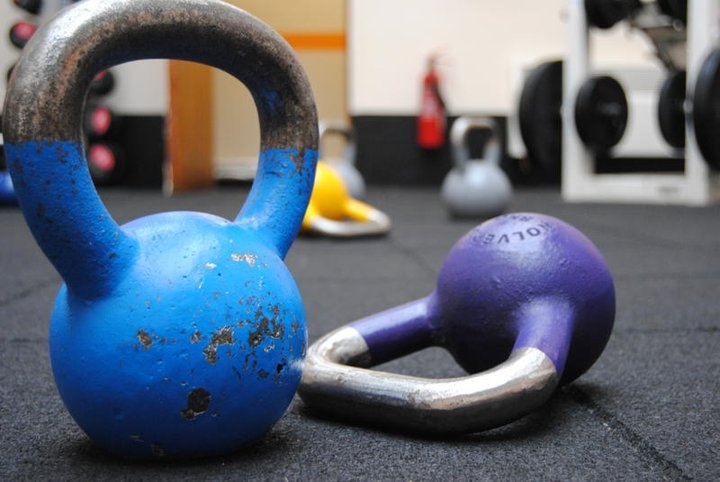
 It is that time again. Yes January is upon us again and no doubt many of us are feeling guilty about our over indulgences over the festive period. What better way to reverse this than to get into the gym to eliminate the season of excess.
I could not agree more, but before you hurry off to the gym it may be helpful to arm yourself with some knowledge about why you are exercising and how the training that you are doing is going to benefit you (or not as the case may be).
Hands up who is going to head straight for the cardio machines for a half an hour stint at the very least? The chances are that is a large proportion of you. I have eaten and drank too much; I am going to burn it off on the bike, cardiovascular exercise uses lots of energy right?
To a certain extent yes, you will use more energy during your workout on a cardiovascular machine working continuously when compared to the same amount of time in the weights room. But let us look at the bigger picture. What is going to happen when we finish our exercise? Those of us who have spent our session doing a full body resistance session will have an elevated basal metabolic rate for at least 24 hours after the session, where as the cardio bunnies will not experience anywhere near the same degree of elevation in basal metabolic rate, nor will any elevation be long lasting.
This is mainly due to the intensity of the work performed during the session. With intensity being governed by how close the work that you performed was to your maximum capabilities or effort. So 3 sets of 5 at 85% of your one repetition maximum on a number of different resistance exercises is much more intense than 30 minutes at 60% of your maximum heart rate on the Cross Trainer. The greater the intensity the greater the elevation in basal metabolic rate following your workout, this elevation will be extended for longer following periods of work of greater intensity.
If weight loss, and more specifically fat loss is the name of the game then elevating our basal metabolic rate significantly higher than resting levels for the rest of the day (and possibly beyond) is the way forward. You must remember that basal metabolic rate (the energy needed to keep all of your body systems working) makes up the largest proportion of your daily energy expenditure, much more than could ever be achieved through physical activity. So increasing your basal metabolic rate is the easiest way to increase your daily energy expenditure, if your energy expenditure increases and the diet is sensibly controlled then a negative energy balance will be induced, this will result in weight loss.
Resistance training will also give you the benefit of increased muscle mass, since muscle mass is also a metabolically active tissue this will result in greater energy expenditure at rest compared to an individual with less muscle mass. When we lose weight we also want to ensure that the majority of it comes from fat tissue, not only for aesthetic reasons but also for our health. Resistance training will go along way to helping this. For males this will give you the lean muscular look, and females it will give you a ‘toned’ sleek appearance. Do you need any more reasons to hit the weights?
You could be forgiven for thinking that you do not need to do any cardiovascular work. For you cardio bunnies do not worry you can still get your fix, however it may be a slightly different approach than the one that you are used too. Instead of working continuously for an extended period of time, you are better off doing short bursts of maximum efforts (or near maximum) separated by periods of recovery. This type of training is known as High Intensity Interval Training or HIIT for short. Numerous studies have shown this form of intermittent training, which is very similar in structure to a typical resistance training session to be just as effective (if not more) in improving your aerobic fitness (what most of you know as stamina, endurance or general fitness). Due to the intense nature of the work being performed the elevation in basal metabolic rate as well as the period at which the metabolic rate remains elevated for will be greater than traditional steady state cardiovascular work. As discussed previously when weight and fat loss is the aim then this can only be of help.
Hopefully this article will have confirmed what you already know or will have opened your eyes to a new approach. Whilst I am not saying that steady state cardiovascular training is worthless, in fact it is essential to build a base level of endurance for those people who compete in long duration events such as long distance runners, cyclists or triathletes. However for what most people want to achieve (particularly in terms of aesthetics) then you could be doing something much more effective with your time. The classic example I always like to use is who would you rather look like, an elite sprinter or an elite marathon runner. Most people respond with the sprinter, so then why do you train like a marathon runner?