
Most of us have heard the phrase ‘No Carbs before Marbs’, with the implication that Carbohydrate foods should be avoided if one is trying to lose weight. Whilst there may be some truth in this statement it is important that we understand some basic information about the much discussed macronutrient that is Carbohydrate before going any further.
For you science geeks Carbohydrate molecules consist of carbon, hydrogen and oxygen atoms joined together in a chain, with there being two hydrogen atoms for every oxygen atom to give the general formula C H₂0. These chains can vary in length depending on the type of carbohydrate molecule, with the simplest form being a Monosaccharide which is a single sugar, examples of these are Glucose, Fructose and Galactose. These monosaccharides can then be joined together to form firstly Disaccharides (which are two monosaccharides joined together). Lactose (Glucose and Galactose), Sucrose (Glucose and Fructose) and Maltose (two Glucose molecules joined together) all fall under the Disaccharide category. Polysaccharides are formed when many (2+) monosaccharides are joined together in a chain; Glycogen and Starch are examples of these. You will probably have heard many of these molecules before with some of them being very common in our diet;
Glucose (Body and brains primary source of energy)
Lactose (Milk Sugar)
Sucrose (Common Table Sugar)
Starch (Plants Carbohydrate store, found in pasta, potato and rice etc)
Glycogen (Human’s Carbohydrate store found in Liver and Muscles)
This is where the terms Simple and Complex Carbohydrates come from with monosaccharides and disaccharides being classified as simple sugars, and polysaccharides falling under the complex grouping. With the distinction being drawn on whether the molecule requires processing by the bodies digestive system before it can be used as an energy source, or whether it can pass straight into the blood stream. Disaccharides require slight processing (not as much as polysaccharide molecules) but we will classify them as simple sugars for simplicities sake.
Carbohydrates are the bodies’ preferred source of energy and it will use these as long as they are readily available. The body will draw on blood glucose (commonly known to as blood sugar) first and foremost; blood glucose is derived directly from ingested glucose (or other monosaccharides). When blood glucose levels drop ingested disaccharides or polysaccharides can be broken into glucose to increase blood glucose levels. Stored Glycogen in the liver and muscles can also be broken down to contribute to blood glucose.
Hopefully now you have a basic understanding of Carbohydrates based on their structure and function. Earlier in the article we discussed how Carbohydrates can differ in structure (Monosaccharides, Disaccharides and Polysaccharides. Not only can Carbohydrates differ in structure, they also differ in function. You will have all heard of the terms ‘Fast release’ and ‘Slow release energy’. This is mainly referring to Carbohydrates and the rate at which they are released into the blood supply as glucose. The Glycaemic Index (GI) scale classifies food items based on this exact principle. The scale operates from 0-100, with 100 being pretty much instant release into the blood supply, no processing required (e.g pure glucose). The closer to zero the more processing required by the digestive system and therefore the longer the delay between ingestion and release into the blood supply. For the most part polysaccharides (e.g oats and bran) are generally classified closer to zero, whilst monosaccharides and disaccharides are classified closer to 100. However this is not completely black and white, polysaccharides that have undergone excessive processing such as white varieties of bread, pasta and rice, which have had a large part of the grain removed, (making the digestive process easier) being classified closer to 100. Some varieties of white potato also provide a much faster supply of glucose. Whilst fructose which is a monosaccharide scoring very low on the GI scale due to its slow effect on blood sugar level.
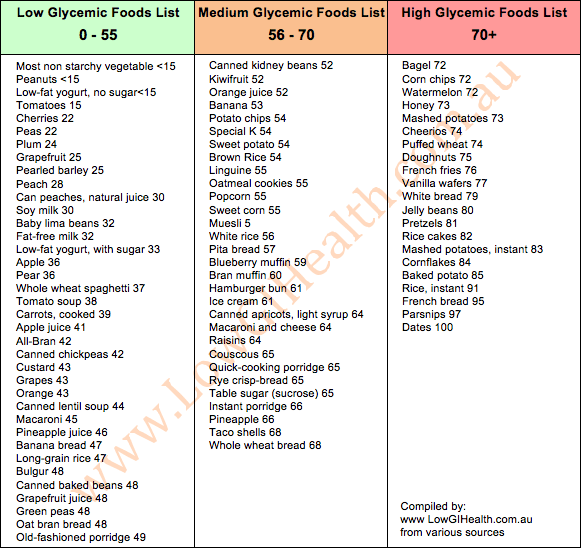
The next question then is which type of Carbohydrate is better? To answer that question we must look what happens once the food is ingested. So a high GI food such as white rice is eaten causing a rapid release of glucose into the blood stream.
What happens next?
That depends on a number of conditions. Blood sugar level is elevated and the cells of the body including the brain will use this as a source of energy to power their metabolic processes. The rate of these metabolic processes will determine the rate of blood glucose utilisation. Physical activity and the recovery period following physical activity will increase the rate of metabolic processes and therefore the rate of blood glucose utilisation, whilst conversely inactivity will decrease the rate of metabolic processes and blood glucose utilisation. If there is a constant turnover (the rate at which blood glucose is being utilised and supplied from ingested sources are well matched) blood glucose can remain relatively stable and constant. However if something upsets that balance, intervention is required. If the rate of utilisation is less than the rate uptake then blood glucose levels will rise and the hormone Insulin will return the blood glucose back to a normal level by promoting the storage of this Glucose as Glycogen in the liver and muscles. If the rate of utilisation is greater than the rate of uptake then blood glucose levels will drop and the hormone Glucagon will promote the breakdown of any stored Glycogen into Glucose which can then be used to bring about a rise in blood sugar.
Sounds like a simple process right? However we must remember that the Liver and Muscles do not have a limited storage capacity. What happens when the storage capacity is exceeded? When the storage of Glucose as Glycogen is maximised and blood sugar levels are stable any excess glucose in the bloodstream will instead be stored as fat tissue by the actions of insulin. Conversely if the muscle and liver Glycogen stores have been depleted then the body will then turn to its other energy reserves, in this scenario fat and muscle tissue breakdown will be initiated to bring about an increase in blood glucose levels.
So we can see how a low GI food that would provide a steady release of glucose into the bloodstream preventing a spike in blood glucose levels would be beneficial when we are in a sedentary state (when blood glucose utilisation is low and glycogen stores will be maximised) as fat storage would be kept to a minimum. On the other hand a high GI food that is released quickly into the bloodstream (which will cause a spike in blood glucose levels) would be beneficial when we are active (when blood glucose utilisation is high) or during the recovery from exercise (when glycogen stores are likely to be depleted.
So the next question has to be why would we avoid foods that contain significant amounts of carbohydrates if we are trying to lose weight?
So we have previously learnt that the hormone insulin promotes storage within the body, as a consequence of this it also inhibits breakdown. Therefore if we are trying to lose weight then we would ideally like to keep insulin levels low. Eating a low carbohydrate diet will keep insulin levels low (as there will not be any peaks in blood sugar levels), in theory this will promote the mobilisation of stored glycogen within the muscles and liver to provide glucose for metabolic processes. Once these stores have been depleted we will then increase the rate of muscle protein and fat tissue breakdown which can be used to provide energy for metabolic processes. Continuing to adopt the low-carbohydrate approach would then in theory lead to the majority of the energy our body needs to be supplied by stored fat tissue.
However it is not quite as simple as that. For a start our body will always try to minimise fat breakdown where possible, this is because fat acts as a reserve store of energy within the body. In a low-carbohydrate situation protein breakdown will also be up regulated. Since tissues made of body protein stores (such as skeletal muscles) tend to be quite metabolically active a loss of this tissue will lead to our drop in our metabolic rate (and as a consequence a drop in the amount of energy required by our body), this is not helpful when the goal is weight loss (or more specifically fat loss). We also have to consider that carbohydrate foods do a very a good job of providing the body with energy as they can be broken down quickly and easily to provide the body with energy (the breakdown of fat and protein is not as efficient). Therefore a low carbohydrate diet may leave you feeling sluggish and lacking in energy. This would make exercise training difficult, and since we should be exercising whilst trying to lose weight it may not be the most sensible plan. It is also important to consider that low GI carbohydrates can provide energy without causing such a rapid insulin spike, and therefore not promoting the storage of energy. In addition to this they are a vital source of dietary fibre (which is essential to promote a healthy digestive system and preventing constipation). Low carbohydrate diets would also restrict large amounts of fruit; however fruit provides a whole host of essential vitamins and minerals. If the practice of following a low-carbohydrate diet is continued our body can end up in a state of ketosis, which I am not going to go into detail about in this article but let us just say that it is not something that we want.
Whilst reducing the amount of carbohydrate in our diet (particularly the processed high GI variety) is probably a good thing. You will initially lose weight following a low-carbohydrate as when carbohydrate is stored it draws water into the cell. So once carbohydrate stores are depleted there will also be a loss of water tissue which will lead to weight loss. But we must exercise a note of caution. If a low-carbohydrate diet is to be followed it needs to be done periodically and sensibly. In a future article I will outline ways in which this can be achieved in a safe and effective way as well as explaining more details about how you can use a foods GI rating to your advantage.
GI Table Source (www.askdrdani.com)